HSKLock Hearing Aid vs Sony CRE-C20
Side-by-side HearAdvisor lab results with SoundGrades, expert pick badges, and the same visualizations we use in product reviews.
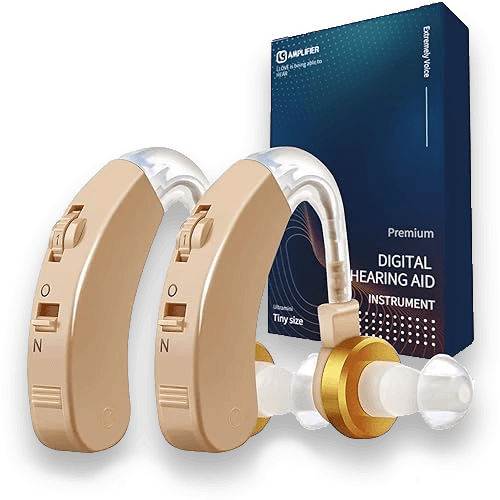
HSKLock Hearing Aid
The HSKLock Hearing Aid is a budget-priced amplification product available for $69, earning a B grade with a SoundScore of 3.0/5 in our lab testing. This behind-the-ear device uses disposable batteries and ranks #5 of 8 amplification products tested. In our testing, the HSKLock delivered excellent feedback handling at 5.0/5, scoring 0.72 points above the category average. This means users can expect stable performance without whistling during typical wear. Own-voice comfort scored 2.8/5, slightly above the category average but only mixed in absolute terms. However, speech clarity presents significant limitations. Speech in quiet scored 1.5/5, falling 0.63 points below the category average, while speech in noise measured 1.0/5, which is 0.37 points below average. Music streaming scored 0.0/5, well below the already-low category average of 1.16/5, making this device unsuitable for audio entertainment purposes. The HSKLock may appeal to budget-conscious consumers seeking basic amplification with reliable feedback control. Those prioritizing speech understanding or music quality should consider alternatives. At this price point, competitors like the Autiphon U0 Series offer similar overall performance, though each device has distinct trade-offs in specific metrics.
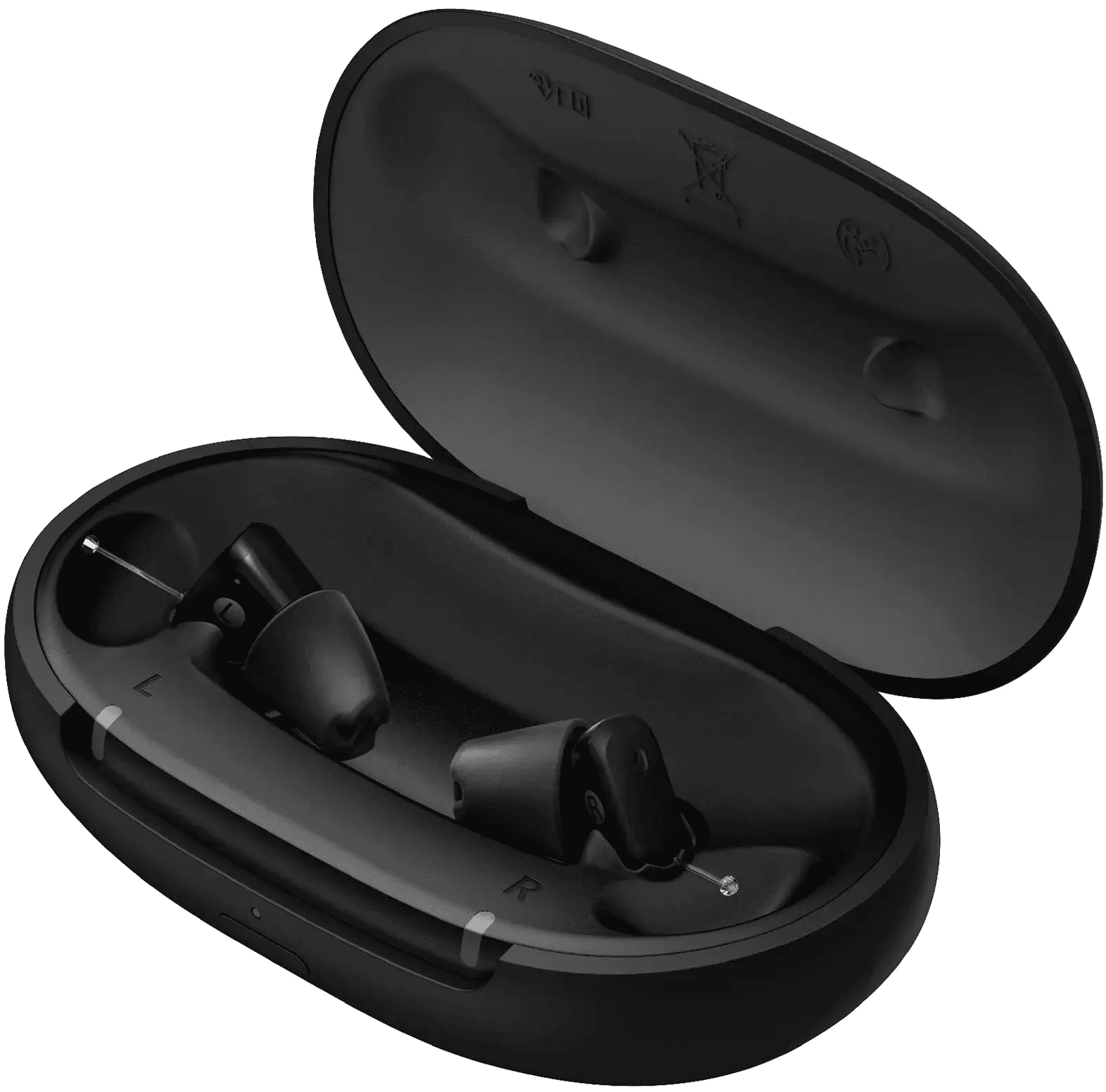
Sony CRE-C20
The Sony CRE-C20 is a mid-priced OTC hearing aid with an invisible-in-ear design, available for $999. In our lab testing, it earned a B grade with a SoundScore of 3.5/5, ranking #37 of 65 OTC hearing aids tested. This device shows a notable split in performance. Speech clarity is a clear strength—speech in quiet scores 4.1/5, which is 1.33 points above the category average, and speech in noise scores 2.7/5, sitting 1.24 points above average despite being only mixed in absolute terms. These results suggest the CRE-C20 prioritizes conversational intelligibility in its tuning approach. However, the device has significant limitations. Music streaming scored 0.0/5, falling 1.92 points below the category average—a notable weakness for users who want to stream audio. Feedback handling is solid at 3.9/5, though it sits 0.64 points below the category average of 4.54/5. Own voice comfort is mixed at 2.9/5, slightly above the category average. The CRE-C20 responds well to adjustment, with the normalized score improving from 3.3/5 at initial fit to 4.2/5 when tuned—a 0.9-point gain. Buyers focused primarily on speech understanding in conversations may find value here, but those wanting music streaming or seeking the strongest overall OTC performance should note that several competitors in this price range, including the Sony CRE-E10 at 4.66/5, scored higher in our testing.
Performance metrics
Scale 1-5 (Tuned)
Lab metric by fit
Scale 1-5 (Tuned)
Speech level
Adjust input dB (Tuned)
Amplification (REIG)
Insertion gain at 65 dB (Tuned)
Audio scenes
Recorded samples (Tuned)
Fitting configuration for tuned fit