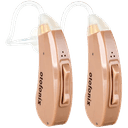
Otofonix Encore Hero

Otofonix Encore Expert Review

Budget Rx
Released 
2018

Summary

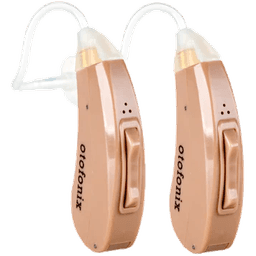
The Otofonix Encore is a budget-priced prescription hearing aid released in 2018, earning a D grade with a SoundScore of 1.74 out of 5 in HearAdvisor's lab testing. At $295, it sits in the lowest price tier for prescription devices, but our testing found significant performance limitations that potential buyers should carefully consider.

In our standardized testing protocol, the Encore struggled with core hearing aid functions. Speech in noise performance measured 2.32 points below the prescription hearing aid category average, which directly impacts the device's usefulness in challenging listening environments like restaurants or social gatherings. Own-voice comfort also fell well below average, suggesting wearers may experience noticeable occlusion effects when speaking.

The device's strongest showing was in feedback handling, where it performed above average in both fit conditions—a modest bright spot in otherwise limited results. However, this alone doesn't compensate for the substantial gaps in speech performance metrics that matter most for daily communication.

Budget-conscious shoppers in this price range may want to consider alternatives that delivered better results in our testing. The RxEars Rxi, also in the budget category, achieved a significantly higher SoundScore of 3.73. Even some lower-priced OTC options like the HSKLock Hearing Aid ($69) and Audien Hearing Atom ($99) outperformed the Encore in our lab measurements. The Otofonix Encore may appeal to those specifically seeking a low-cost prescription option, but our data suggests exploring alternatives before committing.

In the initial fit condition using a power dome with slits, the Otofonix Encore achieved a fit score of just 0.71 out of 5—well below the category average. Speech in noise scored -0.80, reflecting poor performance in challenging acoustic environments. Feedback handling was the lone strength at 5.00, indicating stable operation without whistling. Own-voice comfort scored 2.30, below average, suggesting noticeable occlusion when speaking. The open coupling choice prioritizes natural sound but leaves significant audibility gaps for the target hearing loss profile in our testing.

The tuned fit condition using a closed dome actually resulted in a lower overall fit score of 0.35, a decrease of 0.37 points from the initial configuration. Speech in noise remained unchanged at -0.80, indicating the fitting adjustments provided no speech benefit improvement. Most concerning, own-voice comfort dropped dramatically to 0.10, reflecting severe occlusion issues with the more closed coupling. Feedback handling remained strong at 4.70. The tuned condition demonstrates that even with professional adjustments, the Encore's fundamental performance limitations persist in our lab testing framework.

Lab Review Scores

D
SoundGrade
Initial Score
1.8
Tuned Score
1.4
Speech in quiet
best
5.0
Own voice
best
2.3
5.0
Speech in noise
best
-0.8
5.0
Feedback handling
best
5.0
5.0
Music streaming
best
0.0
5.0

State-of-the-art Acoustic Laboratory

Quality data starts with quality recordings. HearAdvisor worked with GRAS to build a no-compromise front end so every test is repeatable and reliable.

Learn more
Steve in HearAdvisor Lab
Graph

Lab recordings

Adjust volume to make "No hearing aids" as loud as it would be in the real world, without hearing aids. Remove hearing aids while auditioning. High-quality headphones will improve results!
Otofonix Encore Lab

Lab notes

Initial Fitting
Tuned Fitting
Ear Coupling
Initial Fitting
Power Dome with Slits
Tuned Fitting
Closed Dome

Specs

Behind Ear
Behind Ear
Disposable Batteries