Meta Ray-Ban Glasses (Gen 2) vs Signia Pure Charge&Go MaX
Side-by-side HearAdvisor lab results with SoundGrades, expert pick badges, and the same visualizations we use in product reviews.
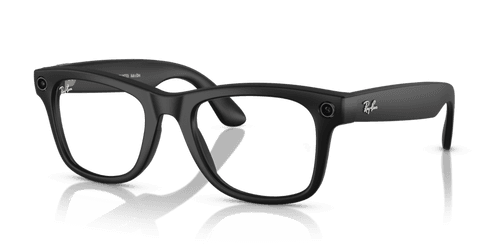
Meta Ray-Ban Glasses (Gen 2)
The Meta Ray-Ban Glasses (Gen 2) is a budget-priced amplification product in the hearing glasses style, earning a B grade with a SoundScore of 3.8/5 in our lab testing. Priced at $375, this device ranks #2 of 8 in the Amplification Product category. In our testing, this product demonstrated exceptional strengths in music streaming quality, scoring 4.3/5—a remarkable 3.14 points above the category average. Own-voice comfort was equally impressive at 4.7/5, exceeding the category average by over 2 points. These results suggest Meta has prioritized the audio experience that their glasses are known for, delivering strong fidelity for streamed content and minimal occlusion-related discomfort. However, speech performance presents a more mixed picture. Speech in quiet scored 2.7/5, which is above the category average by 0.62 points but only mixed in absolute terms. Speech in noise measured 1.6/5—still above average for the category, but low overall. The most notable weakness is feedback handling at 1.9/5, falling 2.38 points below the category average. The Meta Ray-Ban Glasses (Gen 2) are best suited for users who prioritize music streaming quality and comfort over maximum speech clarity. Those seeking amplification primarily for challenging listening environments may want to consider alternatives with stronger speech-in-noise performance.

Choice
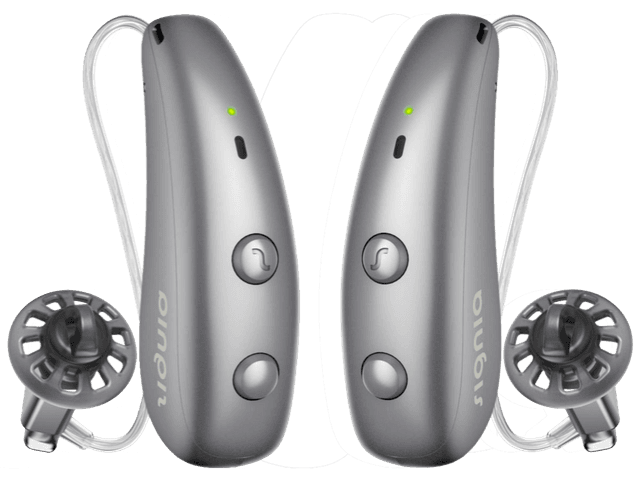
Signia Pure Charge&Go MaX
The Signia Pure Charge&Go MaX is a behind-the-ear prescription hearing aid released in 2026 that earns an A grade with a SoundScore of 4.3/5 in HearAdvisor's lab testing. This strong overall performance reflects solid results across key listening scenarios, with particular strengths in own-voice comfort and speech understanding in noisy environments. In our testing, the Pure Charge&Go MaX demonstrated notable advantages over the prescription hearing aid category average. Own-voice comfort scored 1.00 points above the category average at 3.7/5, suggesting effective management of occlusion-related issues that many hearing aid users find bothersome. Speech in noise performance measured 0.65 points above average at 2.8/5—above the category average, but only mixed in absolute terms, indicating room for improvement in the most challenging listening situations. Speech in quiet scored a solid 3.6/5, landing 0.24 points above the category average. Music streaming measured 2.9/5, slightly above average but mixed in absolute terms. Feedback handling scored an excellent 4.6/5 in absolute terms, though this fell 0.12 points below the category average of 4.72/5, reflecting the generally strong feedback control across modern prescription devices. The device showed meaningful improvement from initial to tuned fitting, with the normalized score rising from 4.2/5 to 4.6/5 after professional adjustment. This suggests that working with a hearing care professional to optimize settings can unlock additional performance, particularly for speech understanding. The Pure Charge&Go MaX appears well-suited for users who prioritize natural own-voice quality and improved conversation clarity in moderately noisy settings.
Performance metrics
Scale 1-5 (Tuned)
Lab metric by fit
Scale 1-5 (Tuned)
Speech level
Adjust input dB (Tuned)
Amplification (REIG)
Insertion gain at 65 dB (Tuned)
Fitting configuration for tuned fit