MDHearing Volt vs Oticon More
Side-by-side HearAdvisor lab results with SoundGrades, expert pick badges, and the same visualizations we use in product reviews.
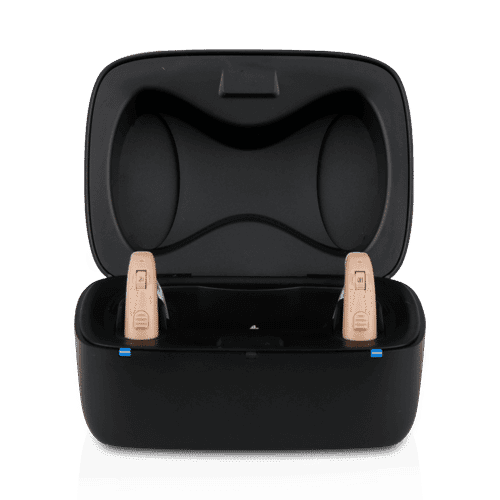
MDHearing Volt
The MDHearing Volt is a budget-priced prescription hearing aid released in 2020, earning a B grade with a SoundScore of 3.0/5 in our lab testing. At $397, it sits in the lowest price tier for prescription devices, ranking #34 of 39 in its category. In our testing, the Volt showed a mixed performance profile with one standout strength: feedback handling scored an excellent 5.0/5, which is 0.28 points above the category average. This means users can expect minimal whistling or squealing during typical wear. However, speech performance was limited, with speech in quiet scoring 1.8/5 (1.65 points below average) and speech in noise at 1.0/5 (1.11 points below average). Own voice comfort was mixed at 2.6/5, roughly matching the category average. Music streaming capability was not functional in our testing, scoring 0.0/5—a significant limitation for users who want to stream audio from their phone. This is 2.76 points below the prescription hearing aid category average. The Volt may appeal to budget-conscious consumers who prioritize basic amplification and feedback-free wear over advanced speech enhancement or streaming features. Those seeking stronger speech performance in the same price range may want to consider alternatives like the RxEars Rxi, which scored 4.07/5 in our testing. The Volt's rechargeable battery and behind-the-ear design offer practical convenience, but its core sound performance reflects its entry-level positioning.

Choice
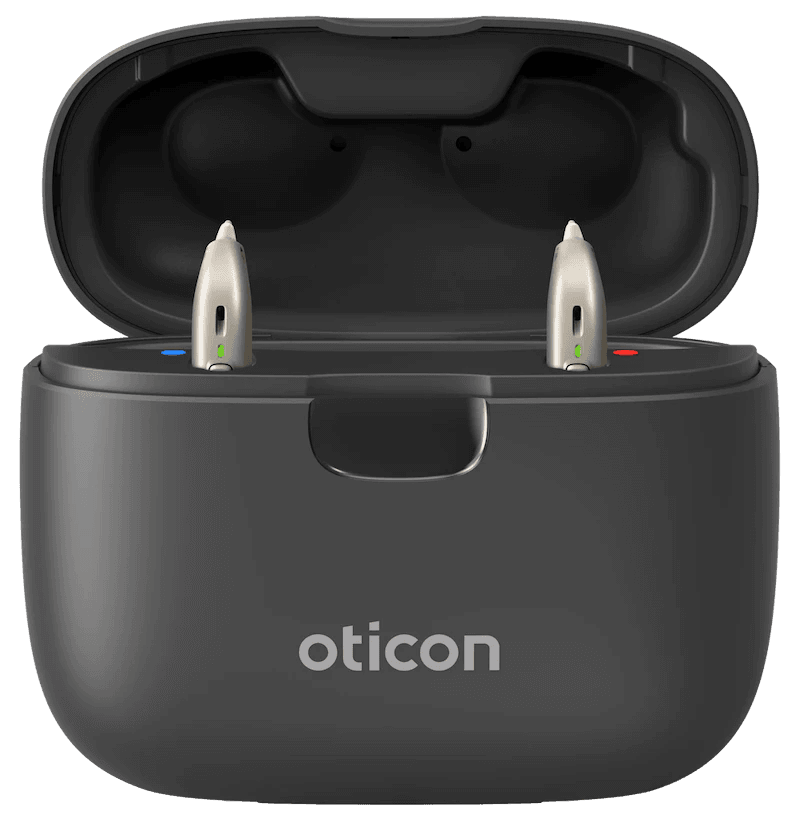
Oticon More
The Oticon More is a premium prescription behind-the-ear hearing aid that earns an A grade with a SoundScore of 4.6/5 in our lab testing, placing it in the top 23% of the 39 prescription hearing aids we've evaluated. Currently available at $4,598, this 2021 release has earned our Expert's Choice Award in both 2023 and 2024. In our testing, the Oticon More demonstrates strong speech clarity performance. Speech in quiet scores 4.0/5, which is 0.65 points above the category average—a meaningful advantage for everyday conversation. Speech in noise measures 2.7/5, which is 0.60 points above the category average, though the absolute score reflects the inherent challenge all hearing aids face in noisy environments. Own-voice comfort is solid at 3.1/5, sitting 0.40 points above average. The device does show one notable weakness: feedback handling scores 3.5/5, which is 1.22 points below the category average of 4.72/5. While this is still a solid score in absolute terms, competing devices in this price range generally perform better in this area. Music streaming is solid at 3.0/5, slightly above the category average. The Oticon More offers flexibility with both rechargeable and disposable battery options, plus streaming compatibility with both iPhone and Android devices including hands-free calling. For those considering alternatives, newer models like the Oticon Intent and Oticon Real score higher in our testing at similar price points. The Oticon More remains a capable choice for listeners who prioritize speech clarity and want a well-established platform with proven performance.
We independently review each item we recommend and appreciate your trust and support. When you buy through our links, we may earn a commission. Learn More.
Performance metrics
Scale 1-5 (Tuned)
Lab metric by fit
Scale 1-5 (Tuned)
Speech level
Adjust input dB (Tuned)
Amplification (REIG)
Insertion gain at 65 dB (Tuned)
Fitting configuration for tuned fit