MDHearing Neo XS vs Otofonix Groove
Side-by-side HearAdvisor lab results with SoundGrades, expert pick badges, and the same visualizations we use in product reviews.
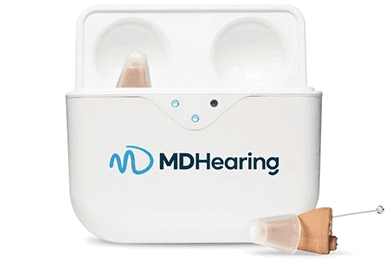
MDHearing Neo XS
The MDHearing Neo XS is a budget OTC hearing aid featuring an invisible-in-ear design, priced at $397. In our lab testing, it earned a C grade with a SoundScore of 2.9/5, ranking #63 of 65 devices in the OTC hearing aid category. This device presents a mixed performance profile. Its standout strength is excellent feedback handling at 5.0/5, scoring 0.46 points above the category average—meaning users should experience minimal whistling or squealing during everyday use. Own-voice comfort is also solid at 3.2/5, sitting 0.69 points above average, which suggests the device manages occlusion reasonably well for its invisible design. However, speech clarity is a significant weakness. Speech in quiet scored just 1.0/5, falling 1.77 points below the category average, while speech in noise scored 1.0/5, sitting 0.48 points below average. Music streaming scored 0.0/5, coming in 1.92 points below average—indicating this device is not suitable for audio entertainment. These low absolute scores mean users may struggle to achieve meaningful speech benefit in our standardized test conditions. The invisible-in-ear form factor and rechargeable batteries offer convenience, but buyers should weigh this against the limited speech performance. Several competitors in the same price range—including the Elehear Beyond (4.34/5) and Apple AirPods Pro 2 (4.04/5)—deliver substantially better sound quality. The Neo XS may appeal to those prioritizing discretion and feedback-free wear over speech clarity, but most users seeking improved communication would benefit from exploring higher-performing alternatives.
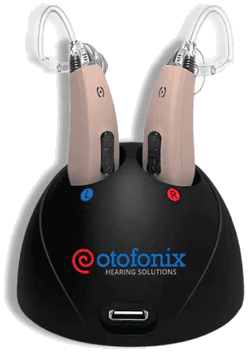
Otofonix Groove
The Otofonix Groove is a behind-the-ear prescription hearing aid priced at $795, earning a C grade with a SoundScore of 2.7/5 in our lab testing. This rechargeable BTE ranks #38 of 39 devices in the prescription hearing aid category, placing it in the bottom 5% of its class. In our testing, the Groove demonstrated excellent feedback handling at 5.0/5, scoring 0.28 points above the category average. This represents a genuine strength, with the device maintaining stability during our standardized challenge motions. However, speech performance was significantly limited, with speech in quiet scoring 1.0/5 (2.40 points below the category average of 3.40) and speech in noise also at 1.0/5 (1.11 points below average). Music streaming was not functional in our tests, scoring 0.0/5 against a category average of 2.76. Own-voice comfort also fell well below typical prescription hearing aid performance at 0.4/5, which is 2.30 points below the category average. At this price point, several lower-cost alternatives delivered stronger overall performance in our testing. Consumers seeking value in the prescription category may want to explore other options, though those requiring robust feedback control in a rechargeable BTE format may find the Groove's stability noteworthy despite its other limitations.
Performance metrics
Scale 1-5 (Tuned)
Lab metric by fit
Scale 1-5 (Tuned)
Speech level
Adjust input dB (Tuned)
Amplification (REIG)
Insertion gain at 65 dB (Tuned)
Audio scenes
Recorded samples (Tuned)
Fitting configuration for tuned fit