HSKLock Hearing Aid vs Sontro Soundwave
Side-by-side HearAdvisor lab results with SoundGrades, expert pick badges, and the same visualizations we use in product reviews.
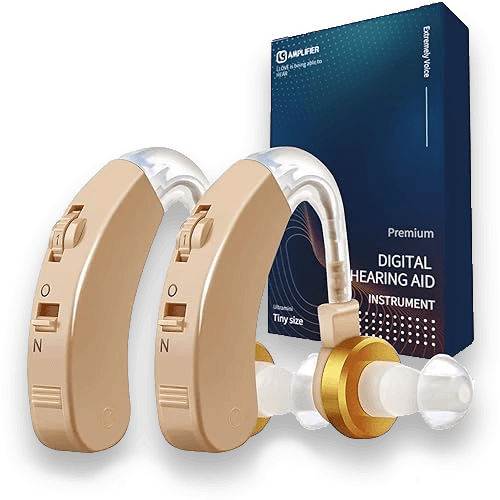
HSKLock Hearing Aid
The HSKLock Hearing Aid is a budget-priced amplification product available for $69, earning a B grade with a SoundScore of 3.0/5 in our lab testing. This behind-the-ear device uses disposable batteries and ranks #5 of 8 amplification products tested. In our testing, the HSKLock delivered excellent feedback handling at 5.0/5, scoring 0.72 points above the category average. This means users can expect stable performance without whistling during typical wear. Own-voice comfort scored 2.8/5, slightly above the category average but only mixed in absolute terms. However, speech clarity presents significant limitations. Speech in quiet scored 1.5/5, falling 0.63 points below the category average, while speech in noise measured 1.0/5, which is 0.37 points below average. Music streaming scored 0.0/5, well below the already-low category average of 1.16/5, making this device unsuitable for audio entertainment purposes. The HSKLock may appeal to budget-conscious consumers seeking basic amplification with reliable feedback control. Those prioritizing speech understanding or music quality should consider alternatives. At this price point, competitors like the Autiphon U0 Series offer similar overall performance, though each device has distinct trade-offs in specific metrics.
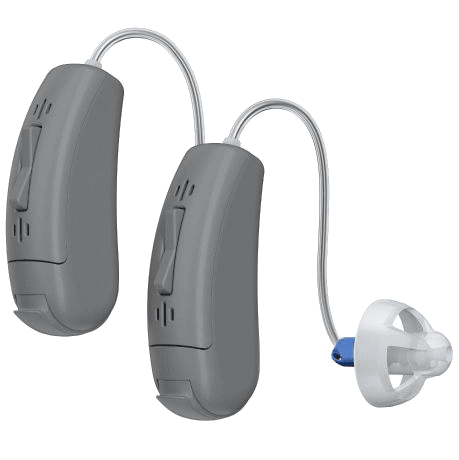
Sontro Soundwave
The Sontro Soundwave is a mid-priced OTC hearing aid that earns a B grade with a SoundScore of 3.0/5 in our lab testing. At $849, this behind-the-ear device uses disposable batteries and sits in the lower tier of OTC performance, ranking #61 of 65 devices in its category. The Soundwave's strongest attribute is own-voice comfort, scoring 3.6/5—a solid result that sits 1.09 points above the OTC category average. This makes it relatively comfortable for wearers who are sensitive to hearing their own voice sound unnatural or boomy. However, other performance areas present significant limitations. Speech clarity scores are below average in both quiet and noisy environments. Speech in quiet scores 2.7/5 (0.12 points below average), while speech in noise drops to 1.2/5 (0.28 points below average). Feedback handling is a notable weakness at 2.5/5, falling 2.04 points below the category average of 4.54/5. Perhaps most limiting is the music streaming score of 0.0/5, indicating this device does not support phone audio streaming—a feature many competitors in this price range offer. Consumers prioritizing own-voice comfort on a moderate budget may find the Soundwave acceptable, but those seeking strong speech clarity or streaming capability should consider alternatives. Several higher-performing OTC devices are available at similar or lower price points, including options like the Lexie Lumen or HearingAssist Control that deliver comparable or better overall sound quality.
Performance metrics
Scale 1-5 (Tuned)
Lab metric by fit
Scale 1-5 (Tuned)
Speech level
Adjust input dB (Tuned)
Amplification (REIG)
Insertion gain at 65 dB (Tuned)
Audio scenes
Recorded samples (Tuned)
Fitting configuration for tuned fit