Eargo 6 vs Otofonix Groove
Side-by-side HearAdvisor lab results with SoundGrades, expert pick badges, and the same visualizations we use in product reviews.
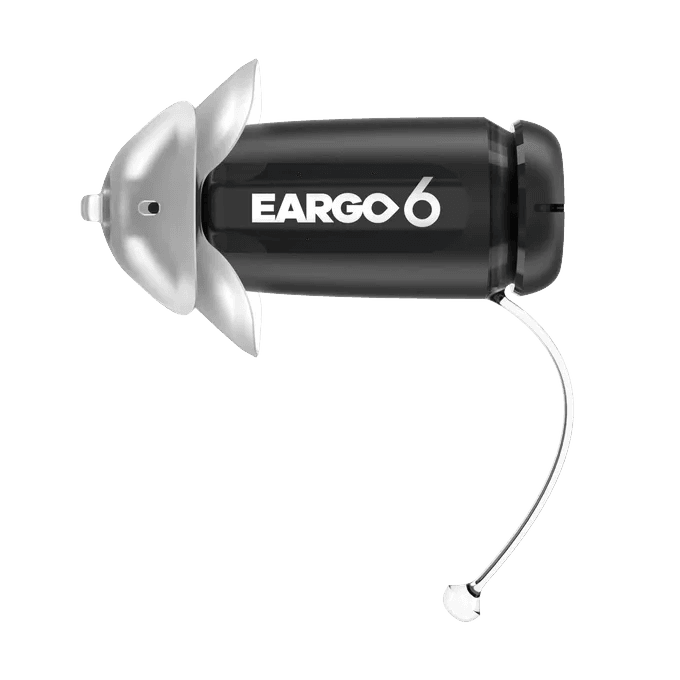
Eargo 6
The Eargo 6 is a premium-priced OTC hearing aid ($2,250) that earns a B grade with a SoundScore of 3.4/5 in our lab testing. This invisible-in-ear device ranks #42 of 65 OTC hearing aids tested, placing it in the top 63% of its category. In our standardized testing, the Eargo 6 demonstrates solid speech clarity in quiet environments, scoring 3.3/5—notably 0.53 points above the OTC category average. Own-voice comfort also performs above category average at 2.9/5, which may benefit users sensitive to the sound of their own voice. However, the device shows limitations in challenging listening situations, with speech-in-noise performance scoring 1.0/5, falling 0.48 points below the category average. A significant limitation is music streaming, which scores 0.0/5—well below the category average by 1.92 points. Users who prioritize streaming audio content should consider alternatives. Feedback handling scores 3.3/5, which is solid in absolute terms though 1.24 points below the category average of 4.54/5. The Eargo 6 may appeal to users prioritizing a completely invisible form factor and solid quiet-environment performance. However, at its premium price point, alternatives like the Sony CRE-C10 offer stronger overall performance at a lower price. The rechargeable battery adds convenience, but buyers should weigh the device's limitations in noise and streaming against its aesthetic benefits.
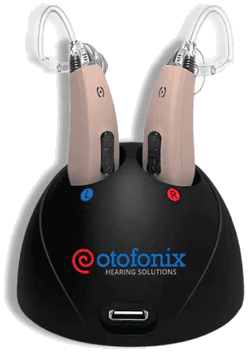
Otofonix Groove
The Otofonix Groove is a behind-the-ear prescription hearing aid priced at $795, earning a C grade with a SoundScore of 2.7/5 in our lab testing. This rechargeable BTE ranks #38 of 39 devices in the prescription hearing aid category, placing it in the bottom 5% of its class. In our testing, the Groove demonstrated excellent feedback handling at 5.0/5, scoring 0.28 points above the category average. This represents a genuine strength, with the device maintaining stability during our standardized challenge motions. However, speech performance was significantly limited, with speech in quiet scoring 1.0/5 (2.40 points below the category average of 3.40) and speech in noise also at 1.0/5 (1.11 points below average). Music streaming was not functional in our tests, scoring 0.0/5 against a category average of 2.76. Own-voice comfort also fell well below typical prescription hearing aid performance at 0.4/5, which is 2.30 points below the category average. At this price point, several lower-cost alternatives delivered stronger overall performance in our testing. Consumers seeking value in the prescription category may want to explore other options, though those requiring robust feedback control in a rechargeable BTE format may find the Groove's stability noteworthy despite its other limitations.
Performance metrics
Scale 1-5 (Tuned)
Speech level
Adjust input dB (Tuned)
Amplification (REIG)
Insertion gain at 65 dB (Tuned)
Audio scenes
Recorded samples (Tuned)
Fitting configuration for tuned fit