BlaidsX Neuro vs MDHearing Volt
Side-by-side HearAdvisor lab results with SoundGrades, expert pick badges, and the same visualizations we use in product reviews.
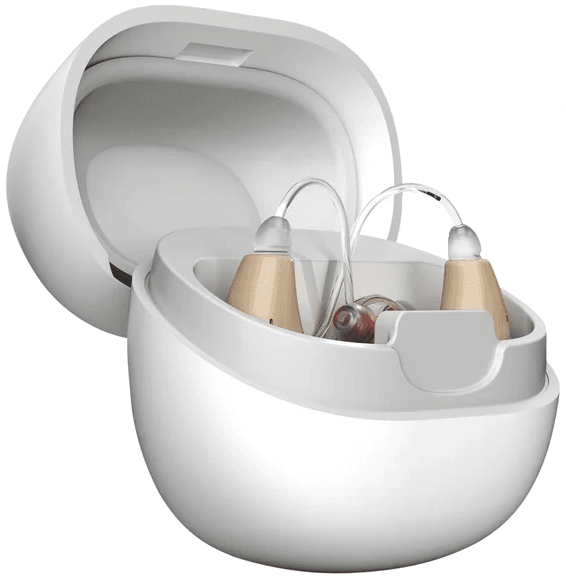
BlaidsX Neuro
The BlaidsX Neuro is a mid-priced OTC hearing aid that earns a B grade with a SoundScore of 3.3/5 in our lab testing. At $799 for this behind-the-ear, rechargeable device, it sits in a competitive price bracket where several higher-performing alternatives exist. In our testing, the Neuro shows a mixed performance profile. Its standout strength is speech clarity in quiet environments, scoring 3.3/5—a solid result that's 0.54 points above the OTC category average. Feedback handling is excellent at 5.0/5, meaning users can expect stable performance without whistling or squealing during normal use. However, the device struggles in more challenging areas: speech in noise scores just 1.0/5 (0.48 points below category average), and music streaming registers at 0.0/5, significantly below the already-modest category average. Own-voice comfort is another weak point, scoring 1.7/5—well below the category average by 0.81 points. This may result in an unnatural sound of one's own voice during conversations. The tuned fit improves the overall score modestly from 3.3 to 3.5, primarily through enhanced feedback stability, though own-voice comfort decreases with the more occluding tulip dome coupling. The BlaidsX Neuro may suit users who primarily need help hearing speech in quieter settings and prioritize feedback-free performance. However, those who frequently encounter noisy environments, stream music, or have higher expectations for overall sound quality should consider alternatives in this price range, several of which score substantially higher in our testing.
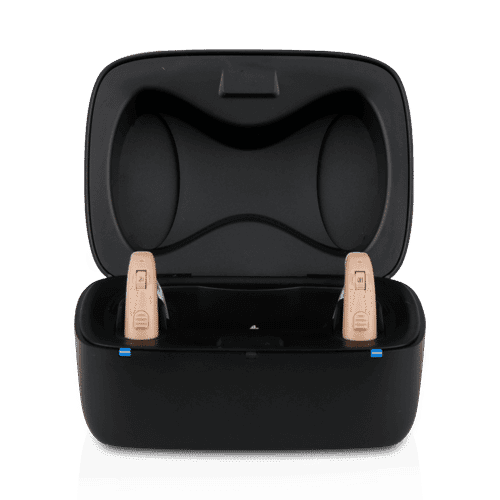
MDHearing Volt
The MDHearing Volt is a budget-priced prescription hearing aid released in 2020, earning a B grade with a SoundScore of 3.0/5 in our lab testing. At $397, it sits in the lowest price tier for prescription devices, ranking #34 of 39 in its category. In our testing, the Volt showed a mixed performance profile with one standout strength: feedback handling scored an excellent 5.0/5, which is 0.28 points above the category average. This means users can expect minimal whistling or squealing during typical wear. However, speech performance was limited, with speech in quiet scoring 1.8/5 (1.65 points below average) and speech in noise at 1.0/5 (1.11 points below average). Own voice comfort was mixed at 2.6/5, roughly matching the category average. Music streaming capability was not functional in our testing, scoring 0.0/5—a significant limitation for users who want to stream audio from their phone. This is 2.76 points below the prescription hearing aid category average. The Volt may appeal to budget-conscious consumers who prioritize basic amplification and feedback-free wear over advanced speech enhancement or streaming features. Those seeking stronger speech performance in the same price range may want to consider alternatives like the RxEars Rxi, which scored 4.07/5 in our testing. The Volt's rechargeable battery and behind-the-ear design offer practical convenience, but its core sound performance reflects its entry-level positioning.
Performance metrics
Scale 1-5 (Tuned)
Lab metric by fit
Scale 1-5 (Tuned)
Speech level
Adjust input dB (Tuned)
Amplification (REIG)
Insertion gain at 65 dB (Tuned)
Fitting configuration for tuned fit