Jabra Enhance Select M3 vs MDHearing Volt
Side-by-side HearAdvisor lab results with SoundGrades, expert pick badges, and the same visualizations we use in product reviews.

Choice
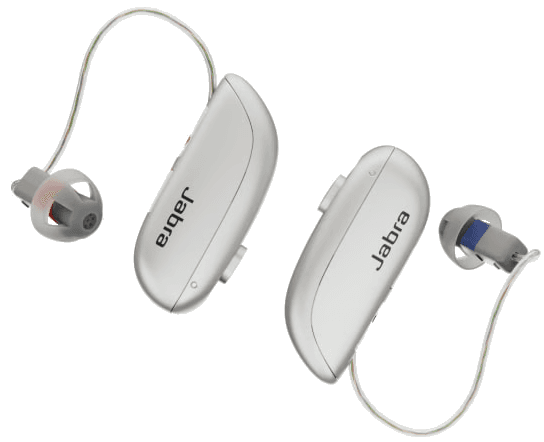
Jabra Enhance Select M3
The Jabra Enhance Select M3 is a premium OTC hearing aid priced at $1,995, earning an A grade with a SoundScore of 4.0/5 in our lab testing. This behind-the-ear device delivers strong overall performance, positioning it among the better-performing options in the OTC category. In our testing, the Enhance Select M3 showed notable strengths in speech clarity during quiet environments, scoring 3.8/5—a solid result that sits 0.95 points above the OTC category average. Music streaming quality also performs well at 2.8/5, which is 0.87 points above average for the category, though still mixed in absolute terms. Feedback handling is excellent at 4.6/5, ensuring stable performance during movement and daily activities. The device does show limitations in challenging listening environments. Speech in noise scored 1.3/5, which falls 0.18 points below the category average and represents a low absolute score. Users who frequently encounter noisy restaurants, busy social gatherings, or similar environments may find this a meaningful limitation. Own-voice comfort scored 2.7/5—above the category average by 0.18 points but only mixed in absolute terms. Consumers seeking strong performance in quieter settings with good music streaming capability may find the Enhance Select M3 appealing. However, shoppers should note that alternatives like the Sennheiser All Day Clear and Jabra Enhance Pro 20 at Costco offer comparable or higher scores at lower price points, potentially representing better overall value for budget-conscious buyers.
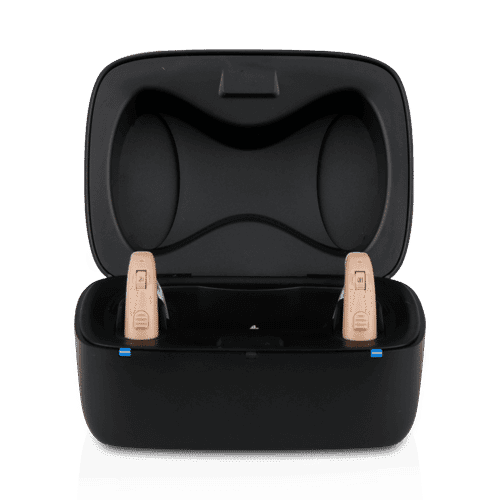
MDHearing Volt
The MDHearing Volt is a budget-priced prescription hearing aid released in 2020, earning a B grade with a SoundScore of 3.0/5 in our lab testing. At $397, it sits in the lowest price tier for prescription devices, ranking #34 of 39 in its category. In our testing, the Volt showed a mixed performance profile with one standout strength: feedback handling scored an excellent 5.0/5, which is 0.28 points above the category average. This means users can expect minimal whistling or squealing during typical wear. However, speech performance was limited, with speech in quiet scoring 1.8/5 (1.65 points below average) and speech in noise at 1.0/5 (1.11 points below average). Own voice comfort was mixed at 2.6/5, roughly matching the category average. Music streaming capability was not functional in our testing, scoring 0.0/5—a significant limitation for users who want to stream audio from their phone. This is 2.76 points below the prescription hearing aid category average. The Volt may appeal to budget-conscious consumers who prioritize basic amplification and feedback-free wear over advanced speech enhancement or streaming features. Those seeking stronger speech performance in the same price range may want to consider alternatives like the RxEars Rxi, which scored 4.07/5 in our testing. The Volt's rechargeable battery and behind-the-ear design offer practical convenience, but its core sound performance reflects its entry-level positioning.
Performance metrics
Scale 1-5 (Tuned)
Lab metric by fit
Scale 1-5 (Tuned)
Speech level
Adjust input dB (Tuned)
Amplification (REIG)
Insertion gain at 65 dB (Tuned)
Fitting configuration for tuned fit