Eargo 7 vs Elehear Delight
Side-by-side HearAdvisor lab results with SoundGrades, expert pick badges, and the same visualizations we use in product reviews.
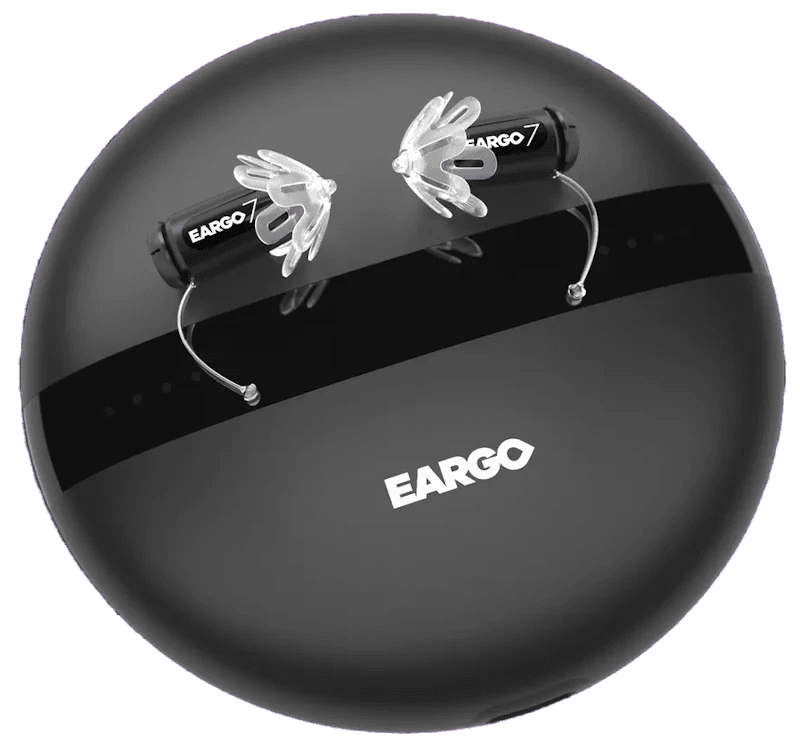
Eargo 7
The Eargo 7 is a premium-priced OTC hearing aid at $2,550, earning a B grade with a SoundScore of 3.4/5 in our lab testing. This invisible-in-ear device ranks #38 of 65 OTC hearing aids tested, placing it in the top 57% of its category. In our testing, the Eargo 7 demonstrates solid speech clarity in quiet environments, scoring 3.1/5—0.33 points above the OTC category average. Own-voice comfort also performs above average at 2.9/5, which is +0.39 points versus typical OTC devices, though only mixed in absolute terms. However, speech understanding in noisy situations is a weakness, scoring just 1.0/5, which falls 0.44 points below the category average. The most notable limitation is music streaming, which scored 0.0/5 in our lab measurements—1.92 points below the OTC average. Feedback handling is solid at 3.8/5 in absolute terms, though this is 0.74 points below the category average of 4.54/5. The Eargo 7 may appeal to users prioritizing a completely invisible design who primarily need help with speech in quieter settings. However, given its premium price point, consumers should note that several lower-priced alternatives in our database achieved higher overall sound scores. Those who frequently stream music or struggle in noisy environments may want to explore other options.

Choice
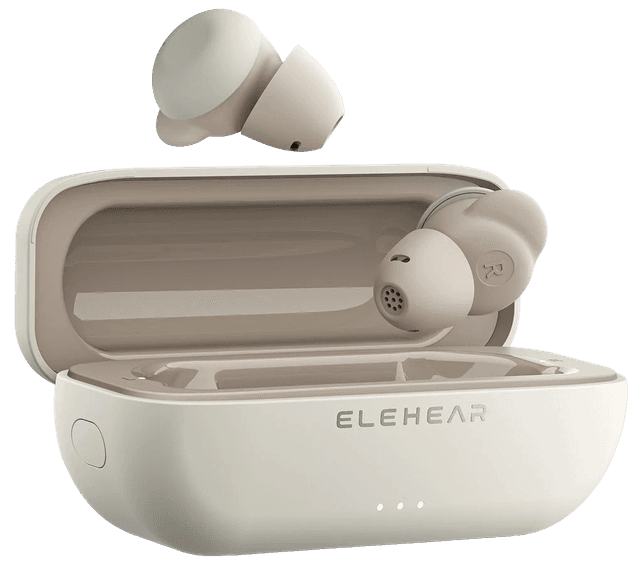
Elehear Delight
The Elehear Delight is a budget-priced OTC hearing aid that delivers impressive performance in HearAdvisor's lab testing, earning an A grade with a SoundScore of 4.3/5. At $315, this visible-in-ear style device ranks #9 among 65 OTC hearing aids tested, placing it in the top 12% of the category. In our testing, the Delight demonstrates strong speech clarity in quiet environments, scoring 4.0/5—a full 1.21 points above the OTC category average of 2.79/5. Music streaming quality is similarly impressive at 3.1/5, which is 1.18 points above the category average and represents solid performance for this price tier. Speech understanding in noisy environments scores 1.8/5, which is above the category average of 1.48/5, though still low in absolute terms—a common challenge across OTC devices. Own-voice comfort scores 2.9/5, above the category average by 0.39 points, though only mixed in absolute terms. Feedback handling is strong at 4.2/5, though slightly below the category average of 4.54/5. The device uses a closed vented dome coupling with an integrated receiver design. The Elehear Delight is well-suited for budget-conscious consumers seeking a capable OTC hearing aid with particular strengths in quiet conversation and audio streaming. Those who frequently encounter challenging noise environments may want to consider whether the modest speech-in-noise performance meets their needs.
We independently review each item we recommend and appreciate your trust and support. When you buy through our links, we may earn a commission. Learn More.
Performance metrics
Scale 1-5 (Tuned)
Speech level
Adjust input dB (Tuned)
Amplification (REIG)
Insertion gain at 65 dB (Tuned)
Fitting configuration for tuned fit