Eargo 5 vs Starkey Edge AI RIC
Side-by-side HearAdvisor lab results with SoundGrades, expert pick badges, and the same visualizations we use in product reviews.
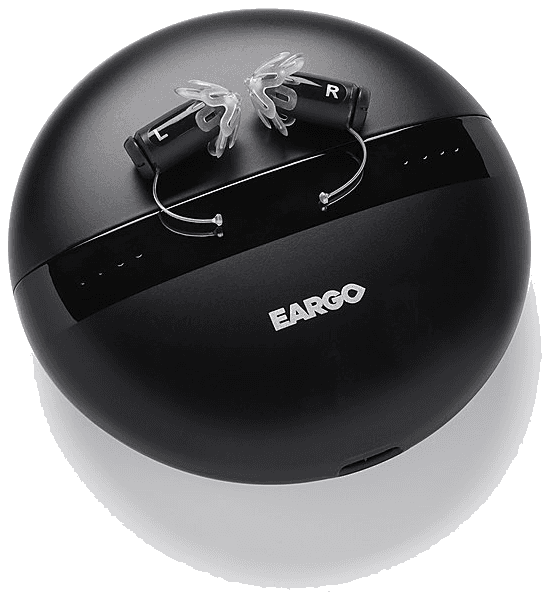
Eargo 5
The Eargo 5 is a premium-priced OTC hearing aid ($1,450) featuring an invisible-in-ear design with rechargeable batteries. In our lab testing, it earned a B grade with a SoundScore of 3.6/5, placing it in the top 52% of the OTC hearing aid category. This device demonstrates solid performance for speech understanding in quiet environments, scoring 3.5/5—0.75 points above the category average of 2.79/5. Own-voice comfort also measures above average at 2.8/5 (+0.29 vs category), though this remains mixed in absolute terms. Feedback handling is strong at 4.2/5, providing reliable stability during wear. However, the Eargo 5 shows notable limitations in other areas. Speech in noise performance is low at 1.4/5, slightly below the category average. Most significantly, music streaming scored 0.0/5, falling 1.92 points below the category average—this device does not support audio streaming functionality. The invisible-in-ear form factor appeals to users prioritizing discretion, and the closed sleeve coupling remains consistent between initial and tuned fits. Tuning provided modest improvement, moving from a normalized Initial Score of 3.5/5 to a Tuned Score of 3.7/5. Given its premium price point, consumers may want to compare against alternatives like the Sony CRE-C10 or Nuance Audio Glasses, which offer similar or better sound performance at lower price points. The Eargo 5 is best suited for users who prioritize cosmetic discretion and primarily need help with speech in quieter settings.

Choice
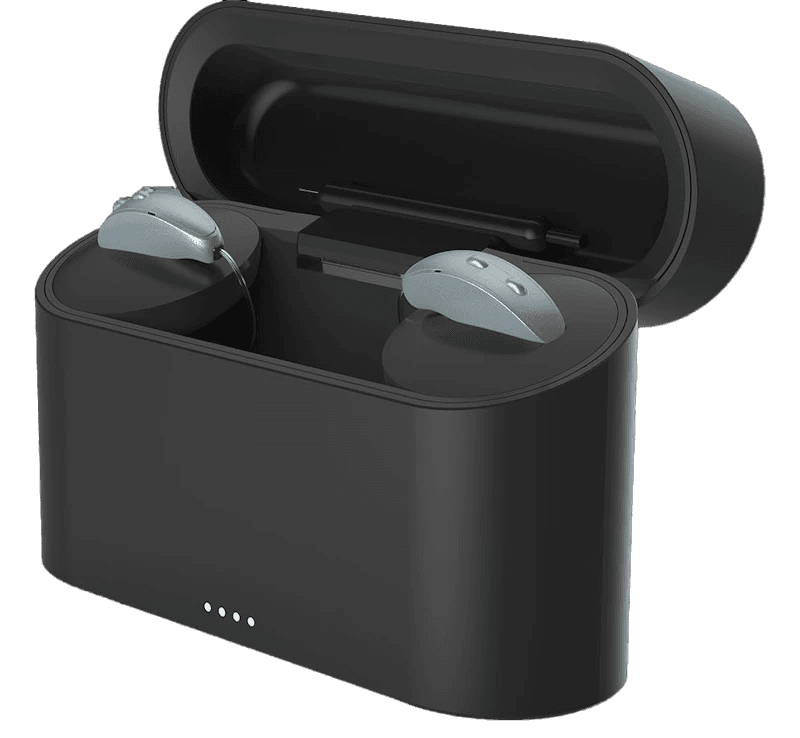
Starkey Edge AI RIC
The Starkey Edge AI RIC is a premium prescription hearing aid released in 2024, priced at $5,000 and earning an A grade with a SoundScore of 4.3/5 in our lab testing. This behind-the-ear device ranks #20 of 39 prescription hearing aids tested, placing it in the top 49% of its category. In our testing, the Edge AI RIC demonstrates notable strengths in speech clarity and music streaming. Speech in quiet scores a strong 4.1/5, measuring +0.68 points above the category average. Music streaming stands out at 3.8/5, a solid score that sits +1.04 points above what we typically see in prescription devices—making it a compelling choice for users who value phone audio quality. Speech in noise scores 2.6/5, which is above the category average by +0.54 points but remains mixed in absolute terms. Feedback handling is excellent at 4.7/5, though this sits just below the category average of 4.72/5. Own-voice comfort scores 2.8/5, slightly above average but mixed overall—something to consider if own-voice naturalness is a priority. The device showed meaningful improvement from tuning: the normalized Initial Score of 4.2/5 rose to 4.7/5 after professional fitting, a +0.5 point gain. As a 2024 Expert's Choice Award winner, the Edge AI RIC offers strong everyday speech performance and standout streaming capabilities. However, buyers in this premium price tier should note that several competitors—including the Phonak Sphere Infinio and Oticon Intent—achieve higher overall scores. The Edge AI RIC is best suited for users who prioritize music streaming quality and strong speech clarity in quieter environments.
Performance metrics
Scale 1-5 (Tuned)
Lab metric by fit
Scale 1-5 (Tuned)
Speech level
Adjust input dB (Tuned)
Amplification (REIG)
Insertion gain at 65 dB (Tuned)
Fitting configuration for tuned fit